Evidence record · Clontarf, Dublin
1014 ADClontarf Breaks the Old Order
At Clontarf, Brian Boru’s forces defeated a coalition of Dublin Norse and Leinster allies. Brian died, legend grew, and Ireland entered a new age of competing kingdoms without one clear master.
Open the interactive frame→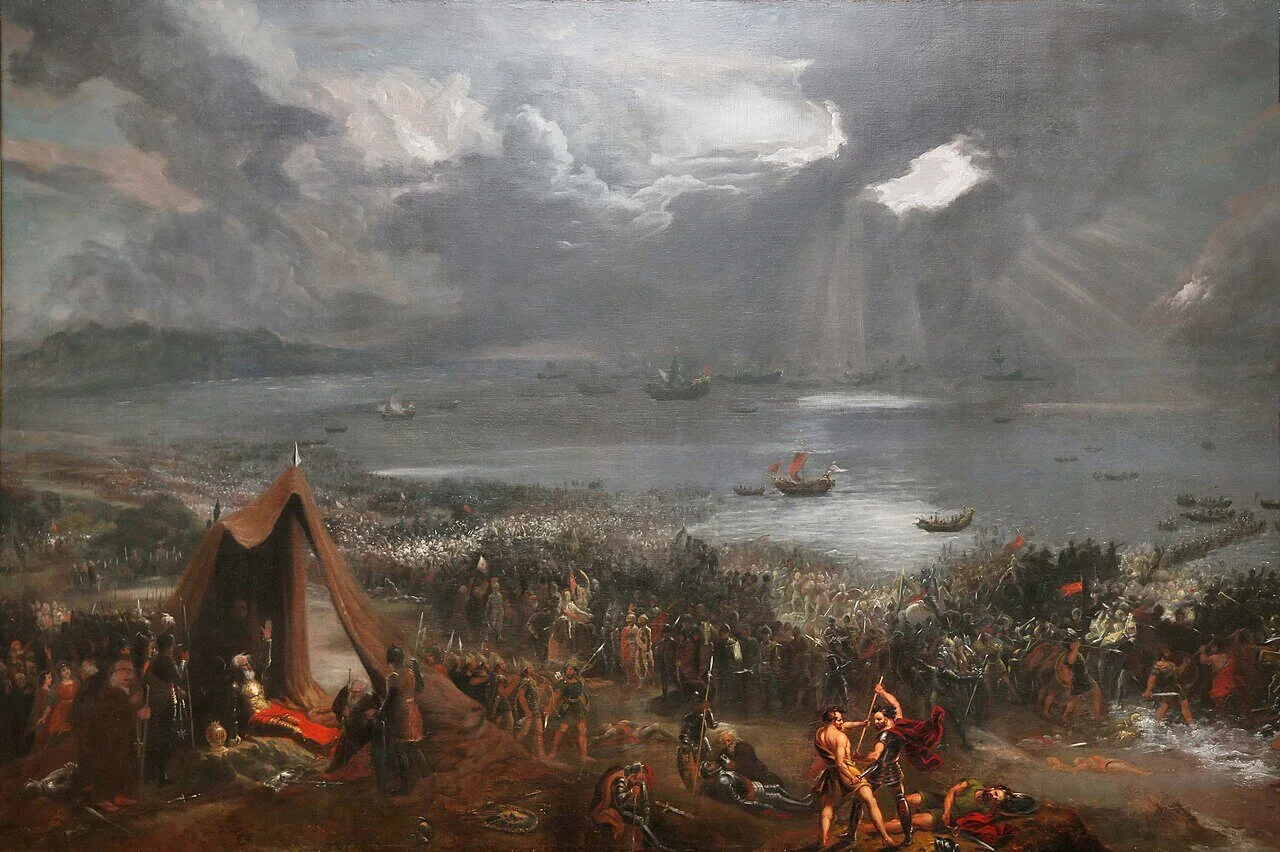
Why it matters
Economic life made visible
Evidence dossier
Read this moment as a hinge
2 minute source-led readFollow the material pressure
Read 1014 AD as a hinge, not a label. At Clontarf, Brian Boru’s forces defeated a coalition of Dublin Norse and Leinster allies. That places “Clontarf Breaks the Old Order” between “Brian Boru Claims the High Kingship” and “The Norman Landing”, while one record was changing the range of choices available in the next.
Put one person in the frame
Bring the frame down to one life in Clontarf, Dublin: a household balancing survival against rules made elsewhere. The public event is the visible surface; underneath it sits land, food, wages, rent, trade and debt beneath the public argument.
What this changes next
Brian died, legend grew, and Ireland entered a new age of competing kingdoms without one clear master. Its importance lies in the altered field it leaves behind: the next actors inherit different risks, institutions and choices. Remove this record and the move from “Brian Boru Claims the High Kingship” to “The Norman Landing” becomes much harder to explain.
Unexpected angle“'Battle of Clontarf' by Hugh Frazer, 1826” is a direct archival trace, but it is still an argument made by framing. Ask what sits outside the image before treating visibility as completeness.
Source ledger