Evidence record · Cashel, County Tipperary
1647 ADCashel Is Sacked
Murrough O’Brien’s parliamentarian army captured the Rock of Cashel and killed defenders and civilians. The attack intensified the war’s religious and retaliatory violence.
Open the interactive frame→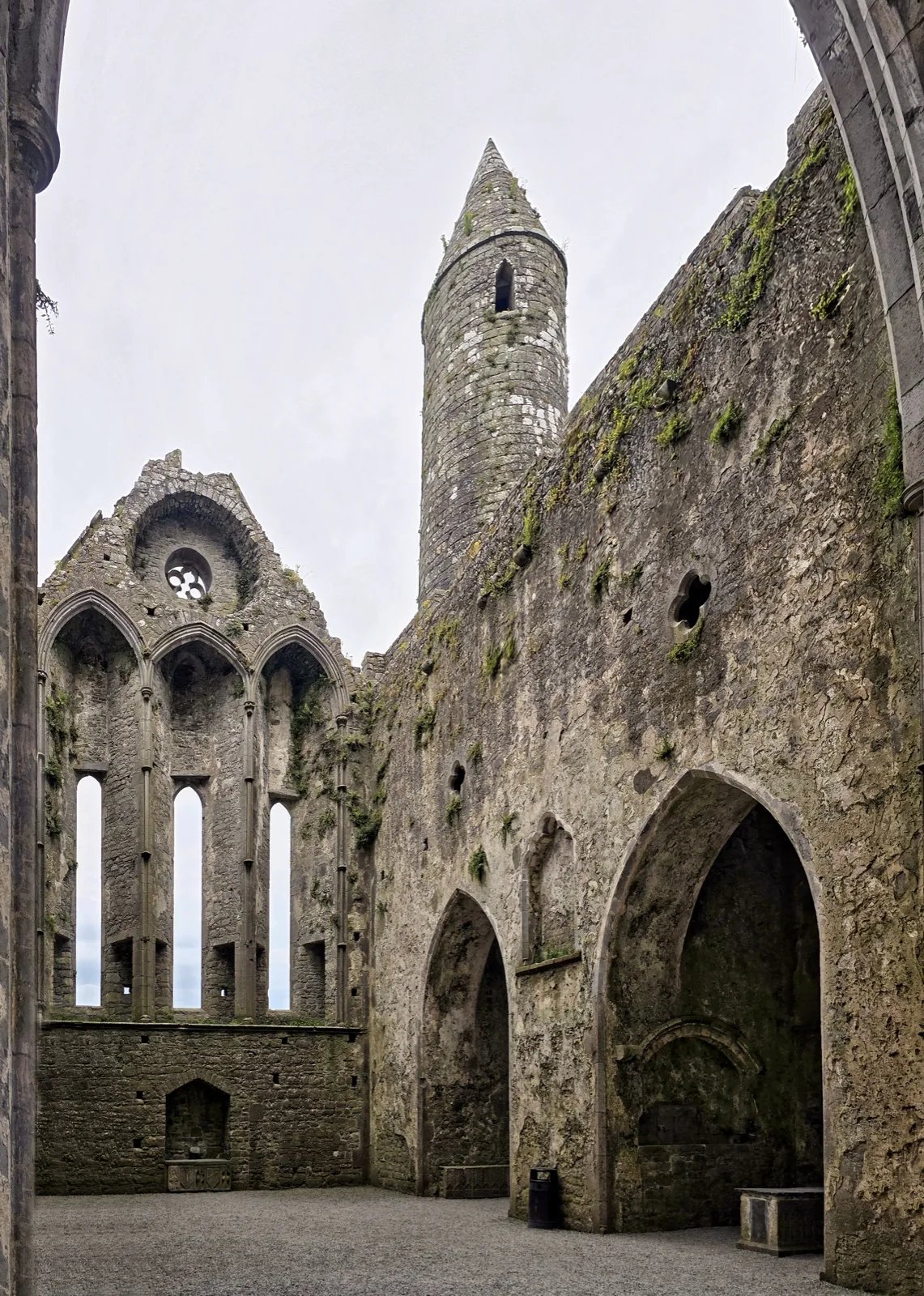
Why it matters
Force made visible
Evidence dossier
Read this moment as a hinge
2 minute source-led readForce changes the field
Read 1647 AD as a hinge, not a label. Murrough O’Brien’s parliamentarian army captured the Rock of Cashel and killed defenders and civilians. That places “Cashel Is Sacked” between “Owen Roe O’Neill Wins at Benburb” and “Drogheda Falls to Cromwell”, while land, law, confession and settlement were being locked together into a durable order.
Belief becomes structure
Bring the frame down to one life in Cashel, County Tipperary: someone calculating risk with incomplete information and irreversible stakes. The public event is the visible surface; underneath it sits organisation, logistics, targets and the political consequences of violence, intersecting with confession, law, education, land and belonging reinforcing one another.
What this changes next
The attack intensified the war’s religious and retaliatory violence. Its importance lies in the altered field it leaves behind: the next actors inherit different risks, institutions and choices. Remove this record and the move from “Owen Roe O’Neill Wins at Benburb” to “Drogheda Falls to Cromwell” becomes much harder to explain.
Unexpected angle“Rock of Cashel Cathedral” is representative, not eyewitness evidence. Use the gap creatively: compare what the image can suggest with what only the written record can establish.
Source ledger