Evidence record · Ireland
1851 ADThe Census Records Demographic Collapse
The population had fallen by roughly 1.5 million since 1841 through death and emigration. Irish-speaking districts suffered especially severe losses.
Open the interactive frame→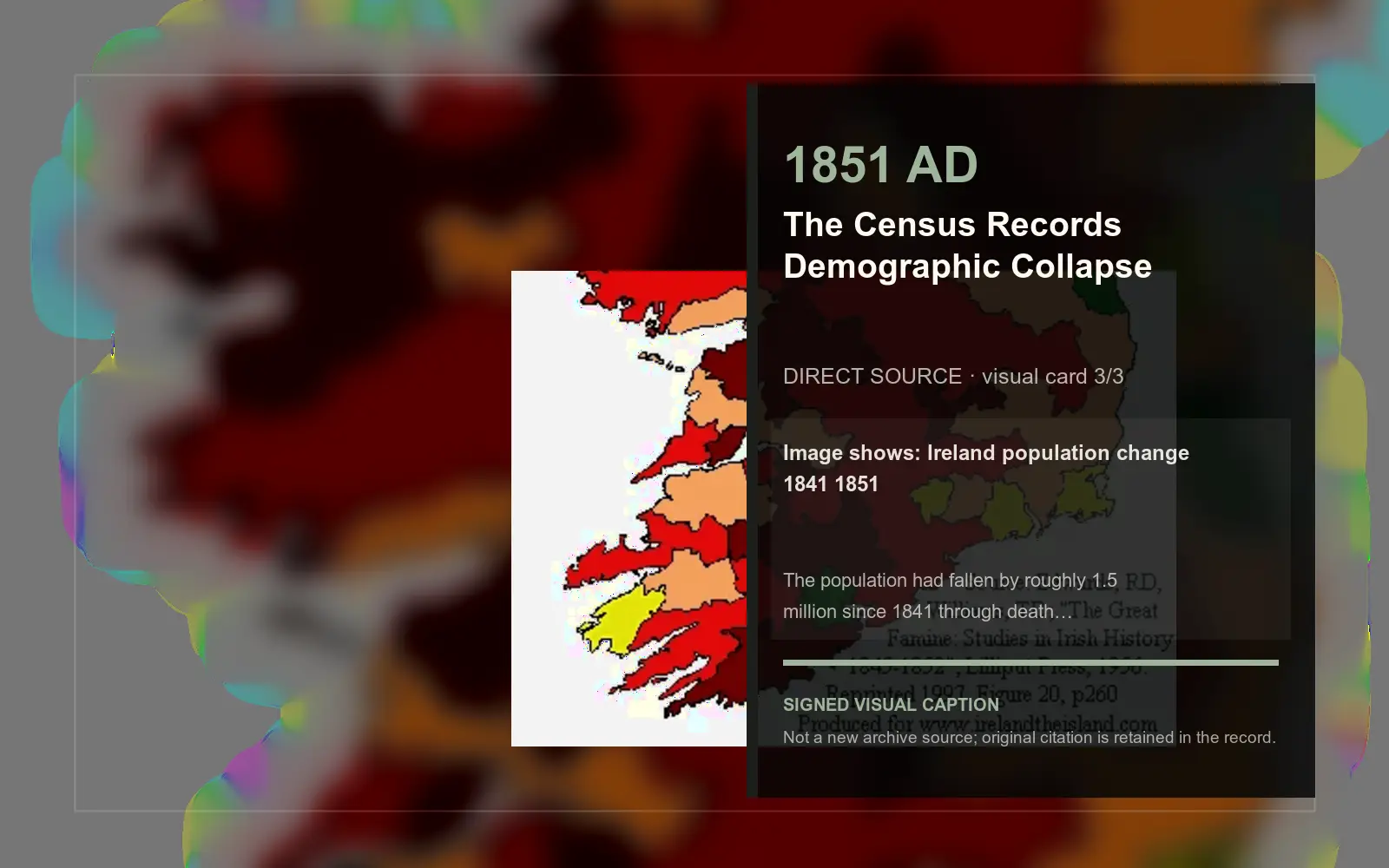
Why it matters
Society made visible
Evidence dossier
Read this moment as a hinge
2 minute source-led readThe social contract shifts
Read 1851 AD as a hinge, not a label. The population had fallen by roughly 1. That places “The Census Records Demographic Collapse” between “Workhouses Hold Four Per Cent of Ireland” and “Irish-Speaking Districts Bear Heavy Losses”, while hunger, relief, eviction and emigration turned policy into a test measured in human survival.
Put one person in the frame
Bring the frame down to one life in Ireland: someone learning whether the changing order includes them on equal terms. The public event is the visible surface; underneath it sits class, family, welfare, identity and the rules that organise belonging.
What this changes next
5 million since 1841 through death and emigration. Irish-speaking districts suffered especially severe losses. Its importance lies in the altered field it leaves behind: the next actors inherit different risks, institutions and choices. Remove this record and the move from “Workhouses Hold Four Per Cent of Ireland” to “Irish-Speaking Districts Bear Heavy Losses” becomes much harder to explain.
Unexpected angle“Ireland population change 1841 1851” is presented through an editorial composite derived from a catalogued visual source. Treat the design as an invitation, not evidence: verify the historical claim in the source ledger and use the constructed frame to ask what no surviving image can show.
Source ledger