Evidence record · Soloheadbeg, County Tipperary
1919 ADSoloheadbeg Opens the Armed Conflict
Volunteers killed two RIC constables while seizing explosives in County Tipperary. The action was locally planned but later came to mark the War of Independence’s opening.
Open the interactive frame→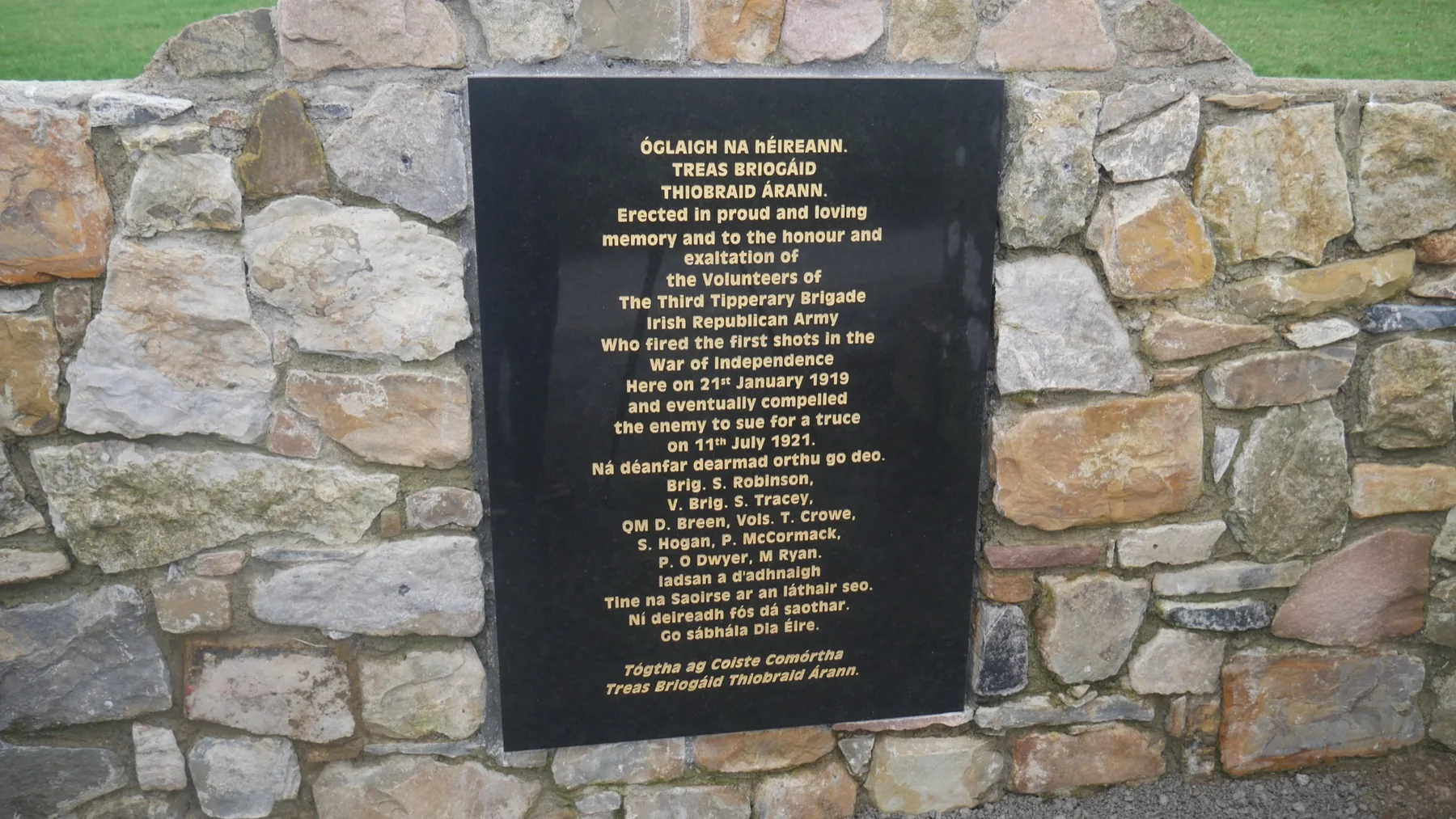
Why it matters
Force made visible
Evidence dossier
Read this moment as a hinge
2 minute source-led readForce changes the field
Read 1919 AD as a hinge, not a label. Volunteers killed two RIC constables while seizing explosives in County Tipperary. That places “Soloheadbeg Opens the Armed Conflict” between “War of Independence” and “The Dáil Organises a Police Boycott”, while legitimacy was moving between parliament, street, armed organisation and treaty table.
Place is part of the cause
Bring the frame down to one life in Soloheadbeg, County Tipperary: someone calculating risk with incomplete information and irreversible stakes. The public event is the visible surface; underneath it sits organisation, logistics, targets and the political consequences of violence, intersecting with geography, local networks and the uneven reach of island-wide power.
What this changes next
The action was locally planned but later came to mark the War of Independence’s opening. Its importance lies in the altered field it leaves behind: the next actors inherit different risks, institutions and choices. Remove this record and the move from “War of Independence” to “The Dáil Organises a Police Boycott” becomes much harder to explain.
Unexpected angle“Soloheadbeg Ambush Memorial” records remembrance rather than the event itself. That distance is useful: it shows what a later generation chose to make durable—and what it asked visitors to carry forward.
Source ledger