Evidence record · Dublin
1922 ADAnti-Treaty Forces Occupy the Four Courts
Rory O’Connor and about two hundred opponents of the Treaty seized the complex. The standoff concentrated tensions that negotiations within the divided movement failed to resolve.
Open the interactive frame→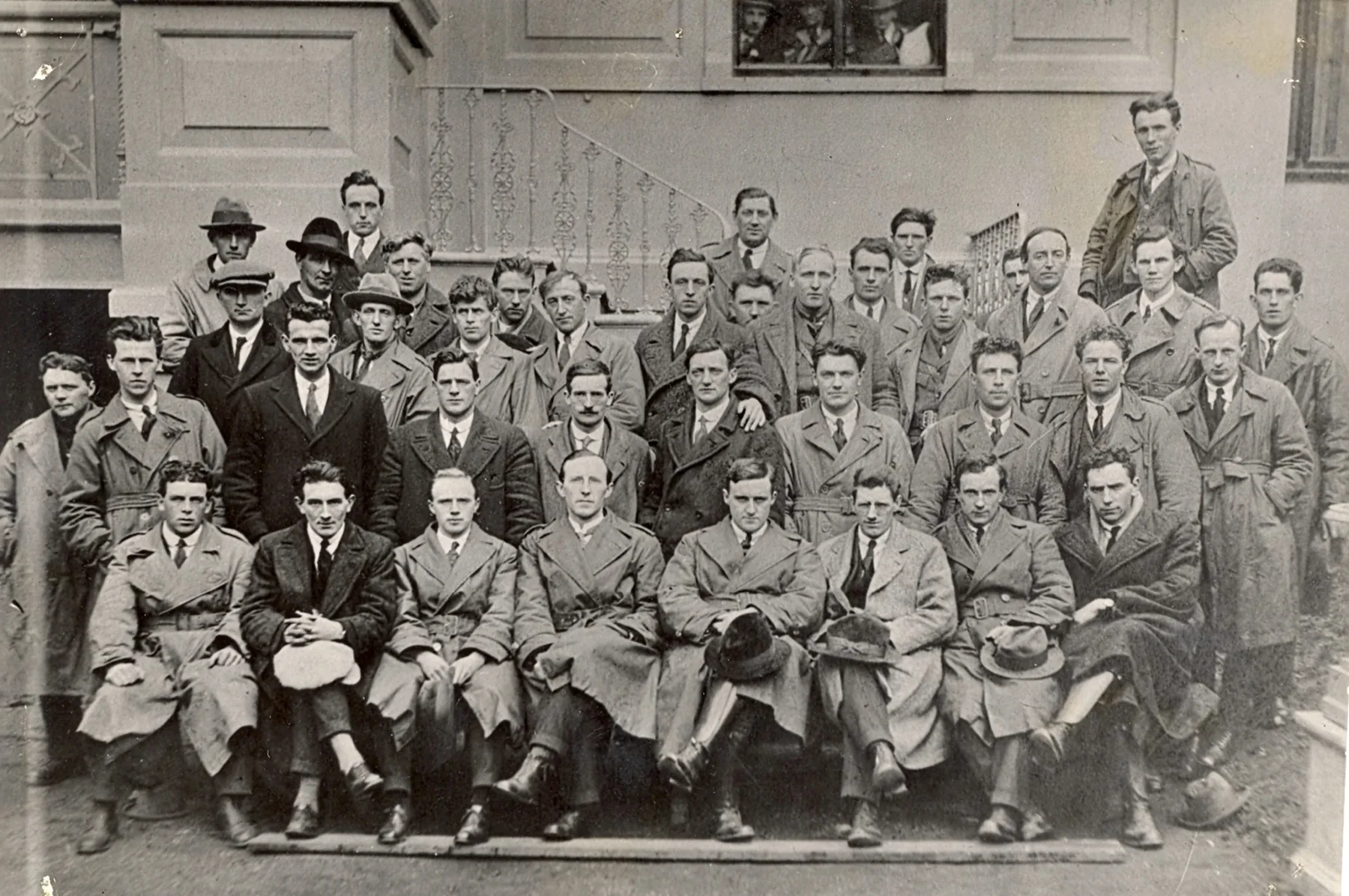
Why it matters
Force made visible
Evidence dossier
Read this moment as a hinge
2 minute source-led readForce changes the field
Read 1922 AD as a hinge, not a label. Rory O’Connor and about two hundred opponents of the Treaty seized the complex. That places “Anti-Treaty Forces Occupy the Four Courts” between “Dublin Castle Is Handed Over” and “Free State and Civil War”, while legitimacy was moving between parliament, street, armed organisation and treaty table.
The rulebook moves
Bring the frame down to one life in Dublin: someone calculating risk with incomplete information and irreversible stakes. The public event is the visible surface; underneath it sits organisation, logistics, targets and the political consequences of violence, intersecting with representation, sovereignty and the institutions entitled to make binding decisions.
What this changes next
The standoff concentrated tensions that negotiations within the divided movement failed to resolve. Its importance lies in the altered field it leaves behind: the next actors inherit different risks, institutions and choices. Remove this record and the move from “Dublin Castle Is Handed Over” to “Free State and Civil War” becomes much harder to explain.
Unexpected angle“Anti Treaty IRA Convention at the Mansion House, Dublin, on April 9th 1922, Higher Quality” is representative, not eyewitness evidence. Use the gap creatively: compare what the image can suggest with what only the written record can establish.
Source ledger