Evidence record · Brú na Bóinne, County Meath
c. 3200 BCNewgrange Catches the Sun
In the Boyne Valley, builders raised a passage tomb older than Stonehenge and the pyramids. At winter solstice, a blade of sunrise enters the chamber, turning stone engineering into theatre.
Open the interactive frame→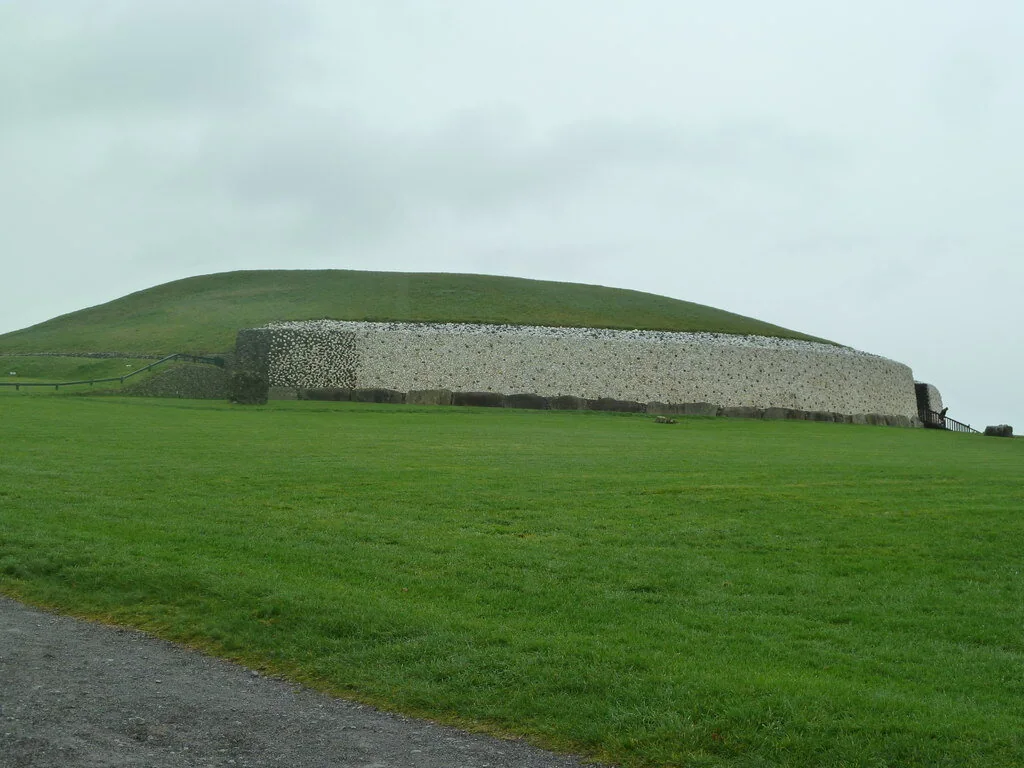
Why it matters
Culture made visible
Evidence dossier
Read this moment as a hinge
2 minute source-led readCulture doing political work
Read c. 3200 BC as a hinge, not a label. In the Boyne Valley, builders raised a passage tomb older than Stonehenge and the pyramids. That places “Newgrange Catches the Sun” between “Farming Changes Everything” and “Copper and Gold Appear”, while one record was changing the range of choices available in the next.
Put one person in the frame
Bring the frame down to one life in Brú na Bóinne, County Meath: a participant who may experience identity before describing it as politics. The public event is the visible surface; underneath it sits language, ritual, sport, literature and symbols that travel farther than a speech.
What this changes next
At winter solstice, a blade of sunrise enters the chamber, turning stone engineering into theatre. Its importance lies in the altered field it leaves behind: the next actors inherit different risks, institutions and choices. Remove this record and the move from “Farming Changes Everything” to “Copper and Gold Appear” becomes much harder to explain.
Unexpected angle“Newgrange Stone Age Passage Tomb Boyne Valley” is a direct archival trace, but it is still an argument made by framing. Ask what sits outside the image before treating visibility as completeness.
Source ledger